

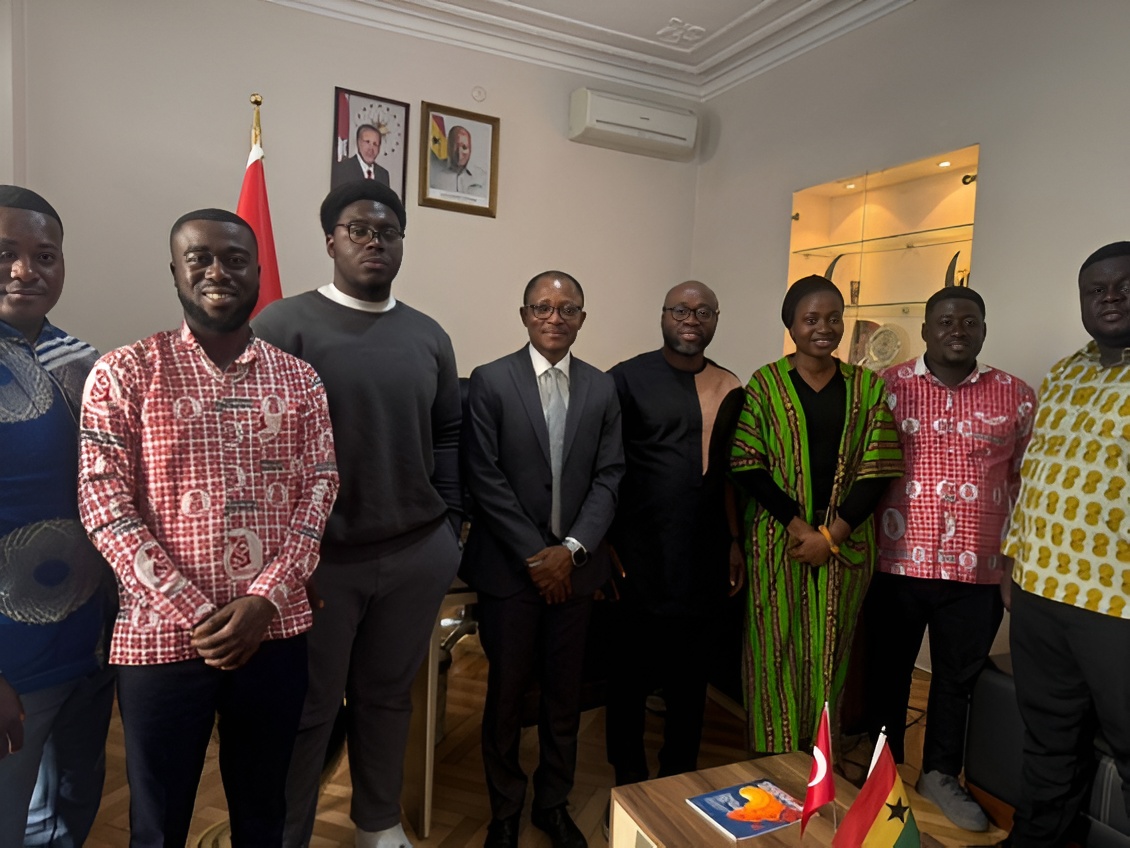
The president of the National Union of Ghana Students has led a high-level delegation to Turkey in a bid to strengthen student diplomacy and improve welfare for Ghanaian students in the diaspora. The delegation’s mission underscores growing recognition of the need to build global networks that support educational opportunities, welfare services, and cultural exchange.
During the visit the NUGS leadership engaged with Turkish university administrators, diaspora organisations, and Ghanaian community groups abroad. The discussions focused on creating bilateral support systems, securing scholarship opportunities, streamlining visa processes, and establishing support networks for Ghanaian students studying in Turkey.
According to NUGS officials, the delegation’s objectives include forging partnerships that allow student exchange programmes, academic collaboration, and mutual cultural awareness. They emphasised the importance of providing Ghanaian students abroad with a stable support structure, especially as many navigate foreign academic environments far from home.
The welfare component of the visit targeted concerns often faced by diaspora students. Among the issues discussed were mental health support, access to legal aid, community cohesion, and safe accommodation. The NUGS president reassured students that the union is committed to safeguarding their interests and will work closely with embassies to ensure that Ghanaian students abroad feel secure and connected.
The delegation’s outreach has been lauded by diaspora organisations, many of which saw the move as timely and necessary. Some community leaders noted that Ghanaian students abroad often face isolation, bureaucratic hurdles, and cultural adjustment difficulties. They believe that formal support systems would make studying abroad more attractive and reduce instances of exploitation or neglect.
Back home in Ghana the initiative was praised by parents, educational stakeholders, and student leaders. Many expressed hope that stronger diaspora linkages could attract more scholarship funds and academic collaboration, while also delivering respect and support to Ghanaian students abroad. Some pointed out that in a rapidly globalising world, building such networks is vital for national development, knowledge transfer, and global competitiveness.
Observers say the delegation to Turkey highlights a strategic shift in student advocacy — from domestic student affairs to global engagement. It reflects changing dynamics where students are seen not only as academic stakeholders but as global citizens whose welfare and international exposure matter for long-term national progress.
As the delegation returns, attention will be on concrete outcomes such as signed agreements, scholarship lines, support programmes, and institutional collaborations. If realised, this initiative could mark the start of a stronger, more supportive ecosystem for Ghanaian students abroad, bridging continents and building global solidarity.